What Dell’s “One Dell Way” overhaul signals to IT leaders

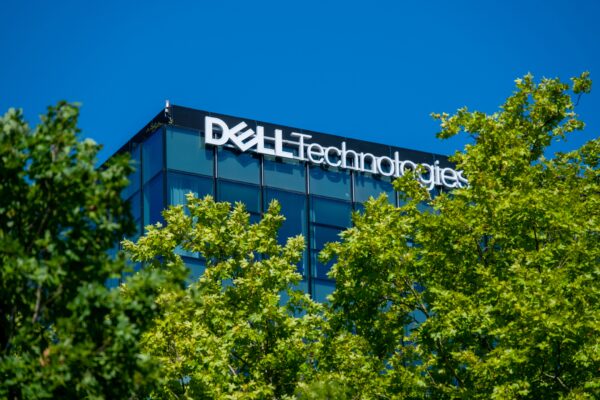
Jeff Clarke’s January 2026 memo to Dell employees signaling the “biggest transformation in company history” deserves close attention from every C-suite executive and IT professional navigating AI integration and enterprise modernization. Dell’s planned May 3 “big bang” migration to a unified enterprise platform—replacing decades of fragmented systems with standardized, AI-ready infrastructure—provides a live case study in modern change management with profound implications for customers and competitors alike.
What Dell is actually doing
Dell is eliminating “multiple variations of fundamental processes” across development, marketing, sales, and service operations in favor of “one way—simplified, standardized, and automated”. This requires decommissioning legacy applications, servers, and databases that have accumulated through organic growth and acquisitions—including the $67 billion EMC merger—and replacing them with a single integrated platform. The Client Solutions Group (PC business), finance, supply chain, marketing, sales, and HR will cut over May 3, 2026, with the Infrastructure Solutions Group (servers, AI infrastructure) following in August.
Clarke’s language is unambiguous: “This is a comprehensive change, not a gradual transition. Once we start operating in the new way on May 3, we won’t go back”. Dell is walking-the-walk of AI transformation – no small feat for the size of this operation. Internal documents show Dell operates roughly 4,700 applications, 70,000 servers and more than 10,000 databases.
Customer impact: The upside scenarios
Faster decision-making and order fulfillment
Unified data architecture eliminates the handoff delays and duplication errors that plague multi-system environments. Dell customers ordering customized AI server configurations or enterprise storage arrays should see measurably shorter quote-to-delivery cycles as sales, engineering, and supply chain teams work from a single source of truth rather than reconciling data across siloed platforms. For enterprises managing urgent AI infrastructure deployments—where Dell already delivers 24-36 hour rack activation times—further acceleration could provide meaningful competitive advantage.
Improved service consistency and account management
Process standardization typically drives 35% efficiency gains and higher customer satisfaction by ensuring every interaction follows identical protocols. Dell’s commercial customers juggling multi-region deployments will benefit from consistent pricing, configuration standards, and support escalation paths regardless of which Dell sales team they engage. The “company-first” operating model Clarke describes should eliminate scenarios where regional divisions offer conflicting product recommendations or incompatible service-level agreements.
Enhanced AI infrastructure capabilities
Clarke explicitly frames One Dell Way as “foundational to our success in an AI-driven world”. Clean, unified data is prerequisite for deploying agentic AI and inference workloads at scale. Dell customers building sovereign AI infrastructure or expanding enterprise AI factories will interact with a vendor whose internal architecture mirrors the data hygiene and systems integration they’re trying to achieve themselves. This reduces friction in co-development relationships and accelerates troubleshooting when Dell and customer systems must interoperate.
Customer impact: The downside risks
Service disruption during cutover windows
Big bang ERP implementations carry documented risks of operational paralysis if training is inadequate or integration testing misses edge cases. Dell customers with active support tickets, pending orders, or scheduled delivery windows near May 3 or August face elevated risk of delays, lost data, or miscommunication as Dell employees navigate unfamiliar systems under time pressure. Critical infrastructure customers—hospitals managing patient data systems, financial institutions running transaction processing—should request explicit service continuity guarantees and escalation paths that bypass newly-trained frontline staff.
Temporary quality fluctuations
ERP migrations routinely produce 2-3 month periods of elevated error rates as users adapt to new workflows and previously functional workarounds break. Dell customers may experience quote inaccuracies, shipping errors, or billing discrepancies as sales representatives struggle with unfamiliar pricing tools or finance teams reconcile payment records across old and new systems. The memo acknowledges “some of you will experience significant shifts in how you work day-to-day”—translation: anticipate AI support call activity to increase and first-contact resolution rates to differ – for better or for worse – from previous interactions through Q3 2026.
Strategic implications for other enterprises
The AI readiness imperative
Dell’s transformation supports my thesis that fragmented legacy systems are fundamentally incompatible with AI at scale. Now with advances in agentic coding, enterprises will be able to build their own “One Way” ERP system in a matter of days. Dell’s willingness to accept massive near-term disruption to achieve AI-ready infrastructure signals that incremental modernization is insufficient. A global survey from the Adecco Group reports only 10% of C-suite leaders say their companies have a structured, “future-ready” plan to support workers through AI-driven disruption. All the while, leadership confidence in AI implementation strategies dropped 11 percentage points in one year, falling from 69% in 2024 to 58% in late 2025.
CFO calculus: Upfront pain for long-term gain
Phased ERP rollouts reduce risk but extend timelines and inflate costs through dual-system maintenance, temporary interfaces, and prolonged change management overhead. Dell’s big bang approach concentrates risk but accelerates time-to-value and eliminates the “death by a thousand cuts” dynamic of multi-year parallel operations. CFOs evaluating similar transformations should model Dell’s approach against three scenarios: successful cutover (35%+ efficiency gains within 12 months), delayed stabilization (18-24 month recovery with 15% cost overruns), and failed implementation (operational crisis requiring rollback).
The decision hinges on risk tolerance and organizational readiness. Dell has two critical advantages: executive sponsorship at the COO level and a two-year preparatory runway through the “Project Maverick” initiative. Companies lacking either should default to phased implementation.
Change management: Why most transformations fail
Seventy percent of large-scale transformations miss objectives due to predictable failures: inadequate training, underestimating user resistance, insufficient testing, and lack of executive alignment. Clarke’s memo addresses these directly: mandatory training starting February 3, explicit “no exceptions” language, and personal accountability (“Your leader will keep you updated”). IT leaders should note Dell’s emphasis on mindset shift—”from thinking and operating function-first to company-first”—as evidence that technology is the easy part.
Successful AI transformation requires assessing C-suite AI readiness, unlocking existing leaders’ potential through upskilling, and building continuous succession planning for AI-native capabilities. Dell’s approach demonstrates that cultural transformation must precede or accompany technical transformation.
The Leadership Mandate
Clarke’s memo is a leadership document disguised as an IT announcement. The transformation Dell is attempting—simultaneous process standardization, cultural realignment, and technical infrastructure overhaul in service of AI readiness—represents the defining challenge for established enterprises in 2026.
CEOs must decide whether their organizations can execute similar transformations with Dell-level precision, or whether their risk profiles demand phased approaches with longer timelines and higher carrying costs. CFOs must model the total cost of ownership for fragmented versus unified platforms over 3-5 year horizons, accounting for AI opportunity costs. CIOs must assess whether their teams possess the change management capabilities, executive sponsorship, and cultural readiness to survive a big bang cutover.
Dell is proving—or disproving—that a 42-year-old hardware company can transform itself into an AI-native enterprise through sheer organizational will. But this isn’t Dell’s first transformation rodeo. Every enterprise leader should be watching closely—again. The lessons will be expensive, and Dell is paying tuition for the entire industry.