The build-versus-buy debate gets an AI twist

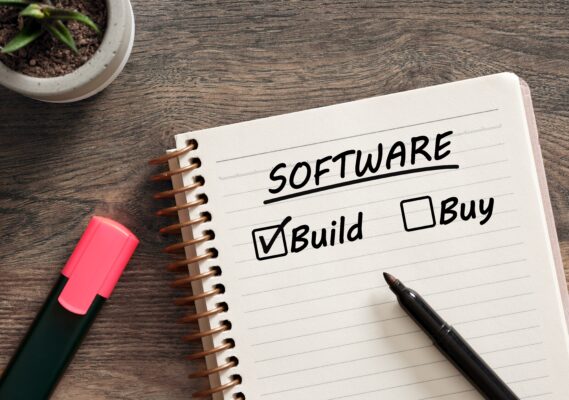
For years, the build-or-buy debate has been at the center of conversation and, for most, it was relatively straightforward. Teams weighed cost, customization, and control, made a call, and moved on. The software might evolve, but the decision itself was largely settled.
These days, that question is a bit more tricky to answer thanks to AI. Agentic AI specifically.
A recent article from CIO highlighted how agentic AI isn’t a single product that can be neatly built or bought. It’s a layered system made up of foundation models, orchestration layers, domain-specific agents, data infrastructure, and governance controls. Each layer comes with its own risks, costs, and challenges which forces IT leaders to rethink the build-or-buy challenge.
This shift now complicates the debate. It’s no longer a simple one-time decision, but rather an ongoing set of decisions shaped by how much control is needed, how fast things need to move, and how much complexity teams can realistically support over time.
What IT pros are saying about build versus buy
The Spiceworks Community recently discussed the build versus buy debate with many echoing that very little software is truly built from scratch anymore. Modern requirements around security, scalability, and portability mean teams rely heavily on frameworks and third-party components, even when they’re “building.” The real work tends to happen in how those pieces are connected and configured.
Integration is also another common pain point. Tools may claim to exchange data easily, but in practice, those connections rarely work exactly as expected, which is why flexibility is key.
The key takeaway? Buy when you can, build when you must, and be realistic about the cost of maintaining custom systems over time.
Why agentic AI raises the stakes
Agentic AI changes the build-versus-buy conversation because it introduces autonomy. These systems don’t just respond to prompts. They retrieve information, reason across data, trigger workflows, and take action, often with little or no human intervention in the moment.
While that autonomy makes agentic AI appealing, it also complicates ownership and makes building everything in-house overwhelming. The lack of capacity currently stifling IT teams also makes total ownership difficult. Agentic AI doesn’t replace that workload. It adds to it.
Choosing sustainability over ideology
Agentic AI has pushed many IT teams toward a more selective approach. Rather than treating build or buy as a binary decision, they’re breaking it down by layer. This layered strategy reflects a broader shift in how IT teams think about ownership. Building everything in-house demands ongoing time, expertise, and maintenance that many teams simply don’t have. Buying everything, on the other hand, can limit flexibility and create challenges once tools are deeply embedded into day-to-day operations.
Rather than debating build versus buy, successful IT teams are choosing sustainability. They buy where the basics are already solved and well supported, build where control or differentiation really matters, and stay honest about what they’ll have to maintain long after the initial rollout. So, where do you stand on the build versus buy debate? Let us know on the Spiceworks Community!