How to keep your homelab costs under control

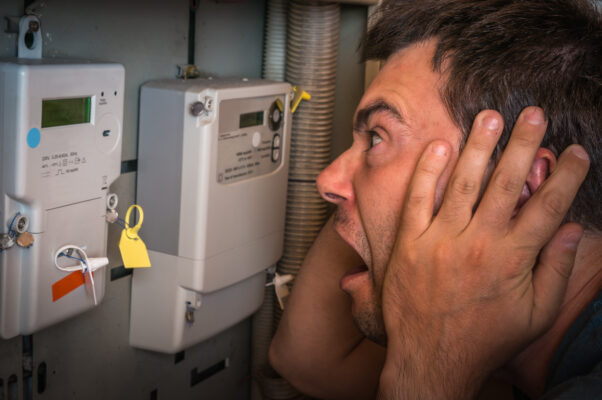
Building your first homelab is exciting until the bills start rolling in. Most people expect the upfront hardware costs, but ongoing electricity bills, unexpected upgrades, and infrastructure needs often turn what seemed like a reasonable investment into a budget nightmare.
Smart cost management from day one makes all the difference. When you understand total ownership costs in advance and make strategic decisions accordingly, you maximize learning value per dollar spent. Whether you’re starting fresh or expanding an existing setup, controlling expenses keeps your learning environment both powerful and affordable.
Understanding total cost of ownership
Most homelab builders focus exclusively on upfront hardware costs, but several ongoing expenses will significantly impact any homelab budget over the long term. Power bills become the biggest hidden cost. One homelab enthusiast reported that three servers drawing 600W cost about $45 monthly, or $535 yearly just for the servers—and that didn’t even include networking equipment, storage, or cooling.
Space and infrastructure needs add expensive layers many people underestimate. Dedicated server racks, proper ventilation, UPSes, and network infrastructure can easily double your initial investment. Even minor components like specialized cables, rack rails, and patch panels contribute to the accumulated sticker shock.
And then there’s the noise. Business-grade servers can be loud, which is all well and good if they’re safely tucked away in a data center. If they’re camped out in your living space, though, that can be a problem.
Maintenance and replacement planning also deserve your consideration. Professional hardware offers realistic learning experiences, but repair costs and proprietary components will strain your budget when things break. Factor in upgrade cycles, licensing renewals, and periodic hardware refreshes to avoid unwelcome financial surprises.
Smart hardware acquisition strategies
Hardware choices make the difference between an affordable learning lab and an expensive hobby. Starting small with versatile equipment that grows with your learning objectives works better than immediately trying to replicate a full corporate environment.
When evaluating purchases, prioritize learning value over impressive specifications. A moderately powerful server that lets you freely experiment provides more educational benefit than cutting-edge hardware that makes you nervous about modifications. Experienced buyers gravitate toward slightly older business-grade equipment that offers professional features at consumer prices.
Used business hardware often delivers the best capability-to-cost balance, but careful evaluation is a must. Focus on systems with documented maintenance histories, available documentation, and standard components that won’t require expensive parts during upgrades. Look for servers with IPMI or iDRAC capabilities for remote management—these features become clutch when your lab grows beyond a single rack. Watch out for firmware compatibility headaches and proprietary RAM or drive caddies that inflate long-term costs, though.
Not exactly sure how to get your hands on quality hardware within the budget available? Strategic sourcing approaches help identify the best deals while avoiding common pitfalls that waste money on equipment that doesn’t serve your goals.
Controlling ongoing operational costs
Electricity is the most significant recurring homelab expense, making monitoring and optimization essential for long-term cost control. Modern smart plugs with energy monitoring let you track consumption patterns and identify power-hungry components that might need replacement or scheduling adjustments.
Credit: P3 International
Calculating baseline power costs using actual measurements rather than theoretical maximums gives you realistic projections. Most servers and networking equipment operate at much lower power levels than their rated capacity during normal operation. A Kill-A-Watt meter provides accurate consumption data you can use for monthly cost projections based on local electricity rates.
Scheduling and automation can help you cut power consumption without sacrificing learning opportunities. Many lab services don’t require 24/7 operation. Development environments, test systems, and backup services can operate on schedules that align with actual usage patterns. Wake-on-LAN capabilities and automated startup scripts enable on-demand access to systems that don’t need constant availability.
Cooling requirements also impact your homelab’s operational costs. Equipment that generates significant heat may require additional air conditioning, effectively doubling power consumption. Efficient hardware choices and proper ventilation help minimize these secondary costs that often catch first-time homelab builders by surprise.
Budget-friendly alternatives that maintain learning value
Virtual labs provide powerful learning experiences without ongoing physical hardware costs. Infrastructure cloud services like AWS EC2, Azure Virtual Machines, and Google Compute Engine offer free tiers and educational credits that enable hands-on experience with professional technologies at minimal cost. Virtual environments work especially well early in your homelab journey.
Hybrid homelab approaches allow you to combine local and cloud resources while effectively controlling costs. For example, you can run core infrastructure locally for always-available services and tap cloud resources for specific projects or resource-intensive workloads. This blend gives you local control and cloud scalability without large-scale physical infrastructure expenses.
Open-source alternatives to expensive commercial software dramatically reduce licensing costs while giving you comparable learning experiences. Tools like Proxmox for virtualization, pfSense for networking, and various Linux distributions deliver business-grade functionality without licensing fees. Open-source solutions often provide more configuration flexibility than their commercial counterparts, too.
Container-based labs using Docker and Kubernetes can run on modest hardware while still delivering a scalable learning environment. Multiple isolated services can coexist on single physical systems, maximizing hardware utilization while minimizing space and power requirements.
Planning for future growth
You’ve got a vision for what you want your homelab to accomplish today, but what about in a year or two? By giving some advance thought to future growth and changing learning objectives, you’ll be able to maintain successful cost management over the long run. Set realistic annual budgets that account for both planned upgrades and unexpected replacement needs. Smart budgeting prevents impulsive purchases that strain your finances while still making sure you have sufficient resources for meaningful expansion.
Plan for upgrade paths that maximize the value from your existing investments. Choose hardware platforms that support memory and storage expansion, allowing incremental improvements rather than complete system replacements. Standardizing on compatible form factors and interfaces reduces your total ownership costs by allowing you to reuse components across various systems.
Then, as your homelab matures, keep an eye out for consolidation opportunities. Multiple older servers might be replaced with a single, more efficient system that provides better performance while reducing power consumption and rack space requirements. Virtualization often lets you cut back on hardware without sacrificing learning opportunities.
You might also want to build relationships with local system integrators, VARs, and managed service providers that could have surplus equipment. Many organizations regularly refresh their infrastructure and may offer equipment to homelab enthusiasts at reasonable prices, offering access to well-maintained hardware that would be expensive if bought new.
Calculating the return on your investment
Your payoff from a well-managed homelab extends far beyond immediate learning opportunities. The hands-on skills you gain from building, running, and managing a homelab can directly translate to increased earning potential, career advancement opportunities, and improved job security over time.
Effective cost management lets you open the door to more ambitious learning projects down the road, too. The money you save on power and hardware now could potentially fund additional training resources, certifications, or specialized equipment that, in turn, opens new career paths for you.
Ultimately, smart cost management ensures that your homelab will stay sustainable over the long term. Labs that become financial burdens get abandoned, wasting both the initial investment and the learning momentum. When you control costs from the beginning, you can create a learning environment that supports your professional development for years to come.